Selected work

Grow Mars V2 / Scientific Visualisation

Research / Future Systems

Scientific Visualisation / Future Systems

GROWMARS V2

Visualising how controlled agriculture could become part of a future human habitat on Mars.

Grow Mars V2 translates scientific research by Daniel Tomkson into a spatial and technical visual system.

My role was not to originate the underlying research, but to understand its requirements, relationships and constraints — then develop a visual language capable of communicating how the system might exist, operate and scale within a future Martian settlement.

Type
Scientific Visualisation
Focus
Controlled Agriculture / Future Habitat
Role
System Interpretation + Design Visualisation
Methods
3D Modelling / Technical Visualisation / Spatial Development
Context
Mars
Research Source
Daniel Tomkson
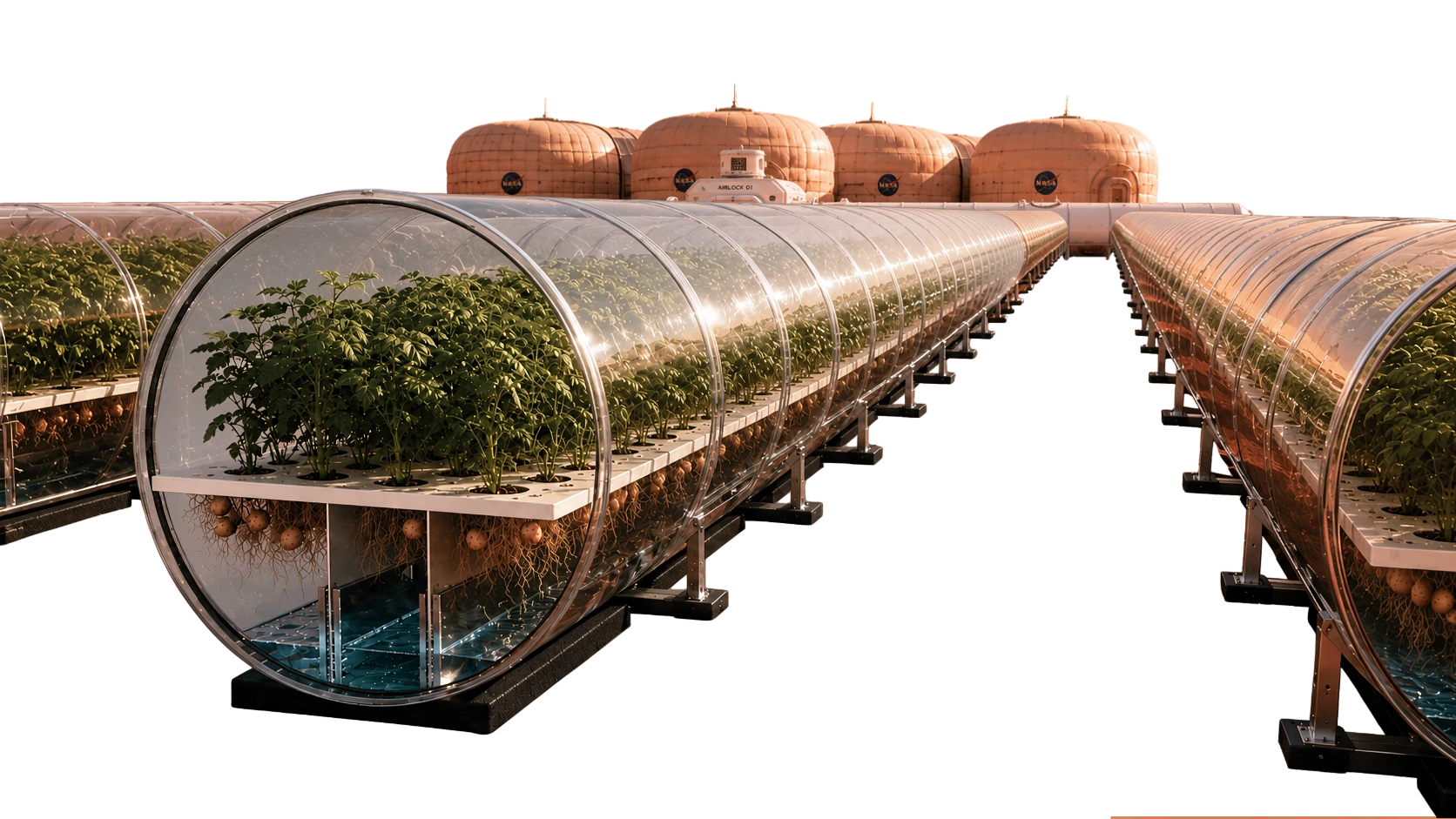
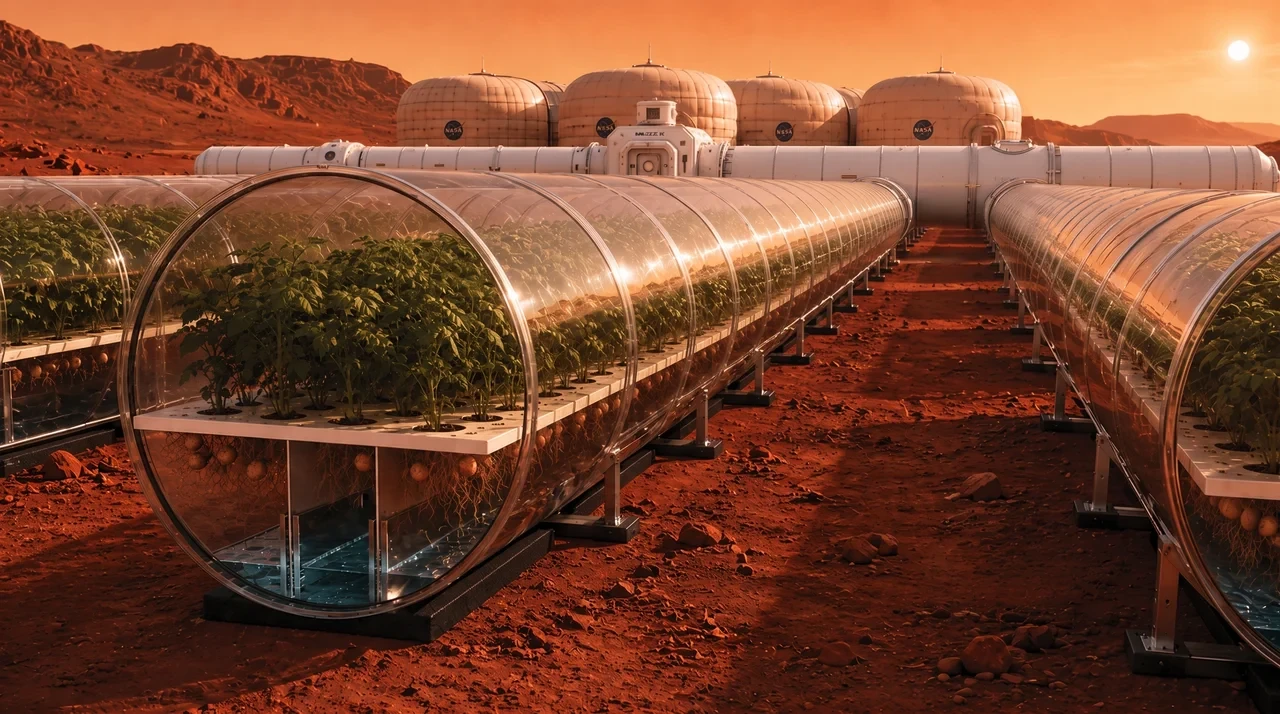
Transparent agricultural tubes connected to a future Mars habitat
System visualisation / Grow Mars V2

01

Starting With the Science

Grow Mars V2 began with an existing scientific proposition rather than a visual concept.

The task was to understand the logic behind the growing system before attempting to design its form: how plants occupy the chamber, how roots develop beneath the cultivation surface, where water is stored, how humidity and aeroponic conditions could be controlled, and how the system connects to a larger habitat.

The visualisation could only become convincing once the system itself was understood.

Agricultural tubes forming a future Mars growing environment
Future environment / system context

02

From Research to Relationships

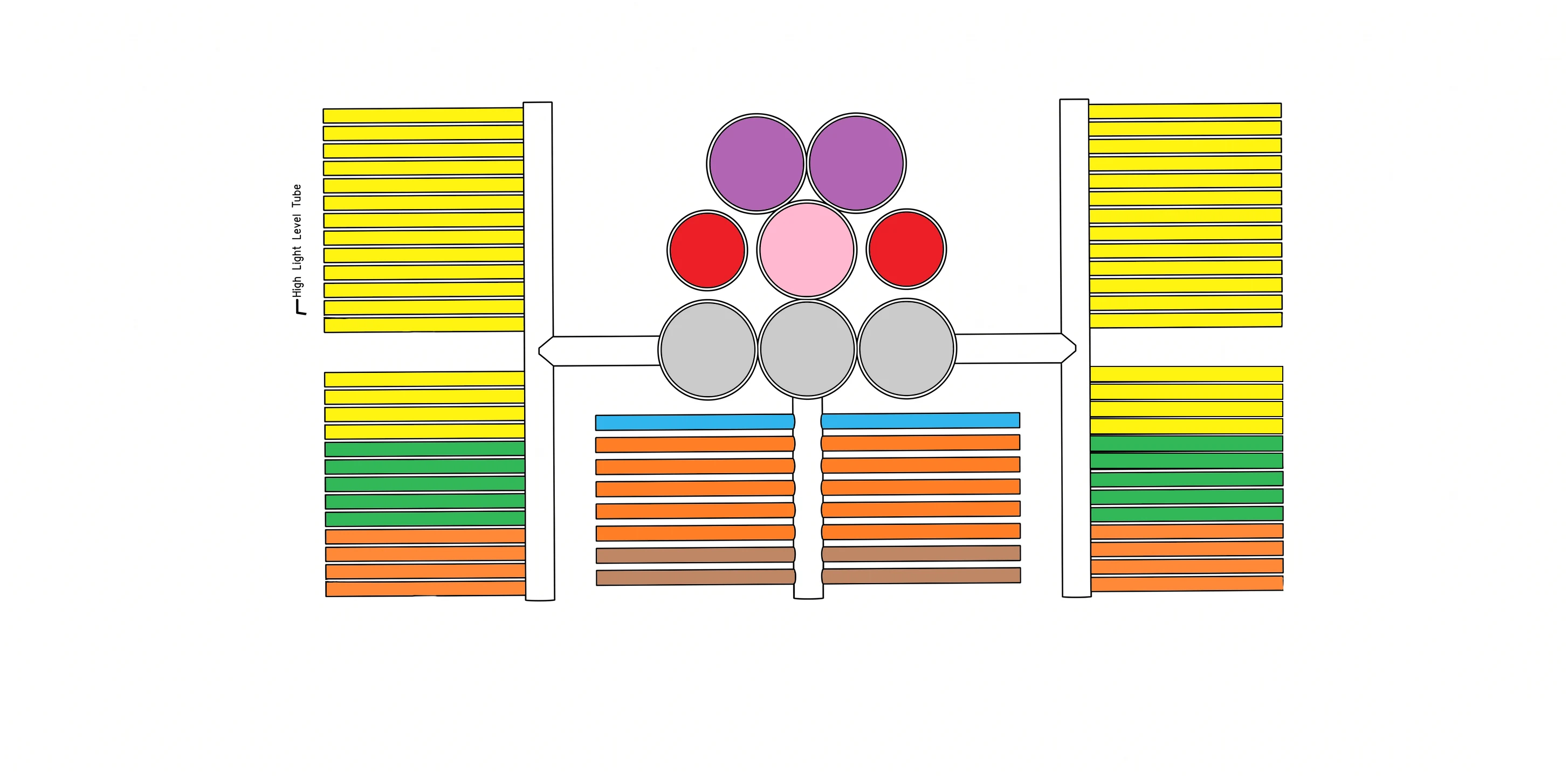
The first design problem was not appearance, but organisation.

Individual requirements were translated into relationships between cultivation, infrastructure, circulation, habitat and support systems.

The drawings became a way of asking practical questions:

  • What connects to what?
  • Which components need direct access?
  • Where does agriculture sit relative to habitation?
  • How can the system expand without losing clarity?
  • Which elements are biological, structural or infrastructural?
Colour-coded top-view organisation drawing for the Grow Mars system
System organisation study

03

The Agricultural Tube

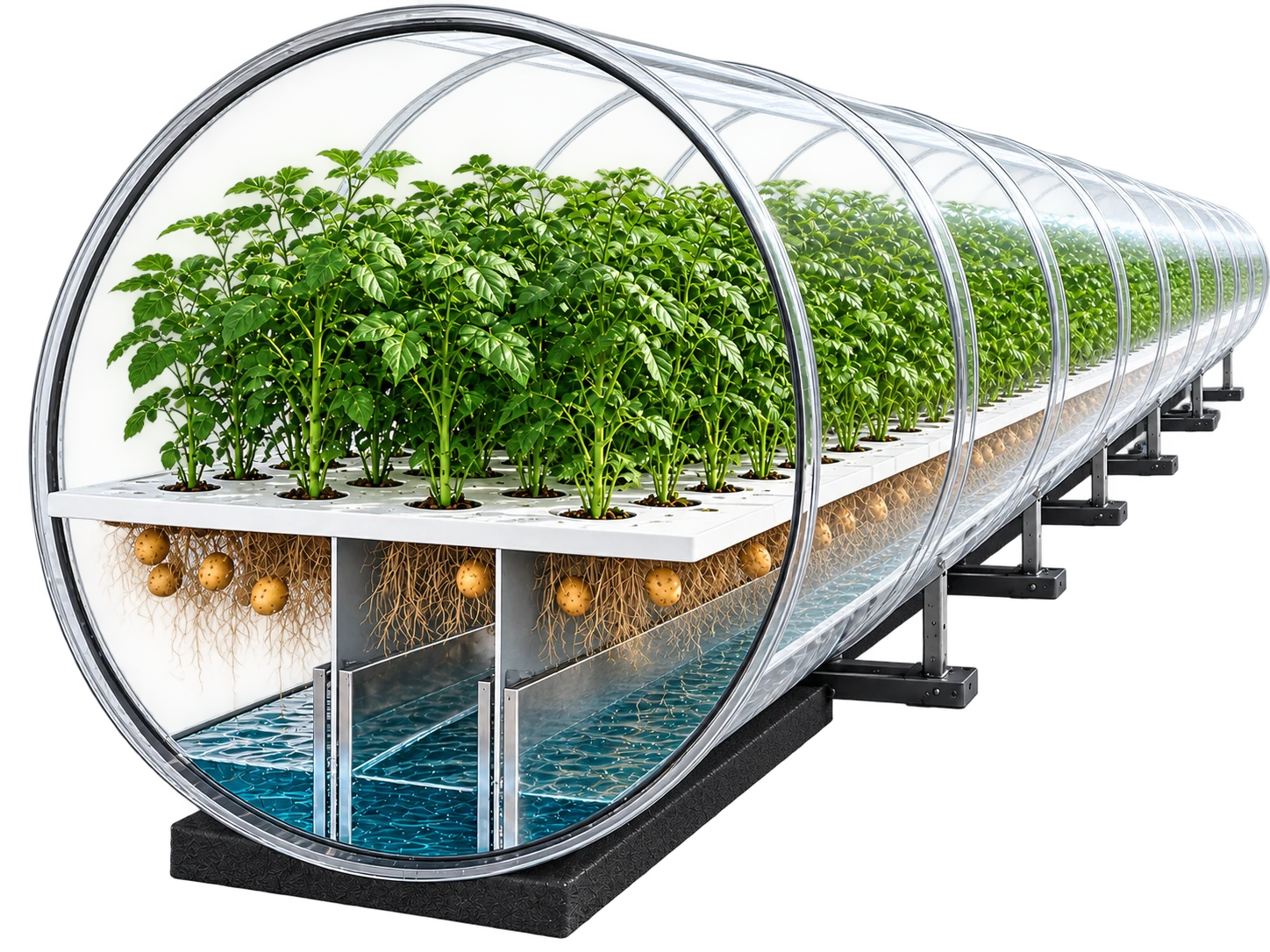
A 1.5 m transparent cylindrical environment turns the growing process itself into part of the architecture.

The agricultural unit was developed as a transparent cylindrical system approximately 1.5 metres in diameter.

A horizontal cultivation plate separates two biological conditions. Above the plate, the foliage occupies the controlled growing environment. Below it, roots and potato tubers remain visible within the protected root zone.

A shallow service and water area sits at the base, while external rails and structural supports stabilise the cylindrical enclosure.

Transparent cylindrical agricultural tube showing foliage roots tubers and water
Agricultural unit / technical visualisation
  1. 01 / Controlled foliage zone
  2. 02 / Cultivation plate
  3. 03 / Root + tuber zone
  4. 04 / Service / water zone
  5. 05 / Transparent enclosure
  6. 06 / Structural support

04

Visual Thinking as Development

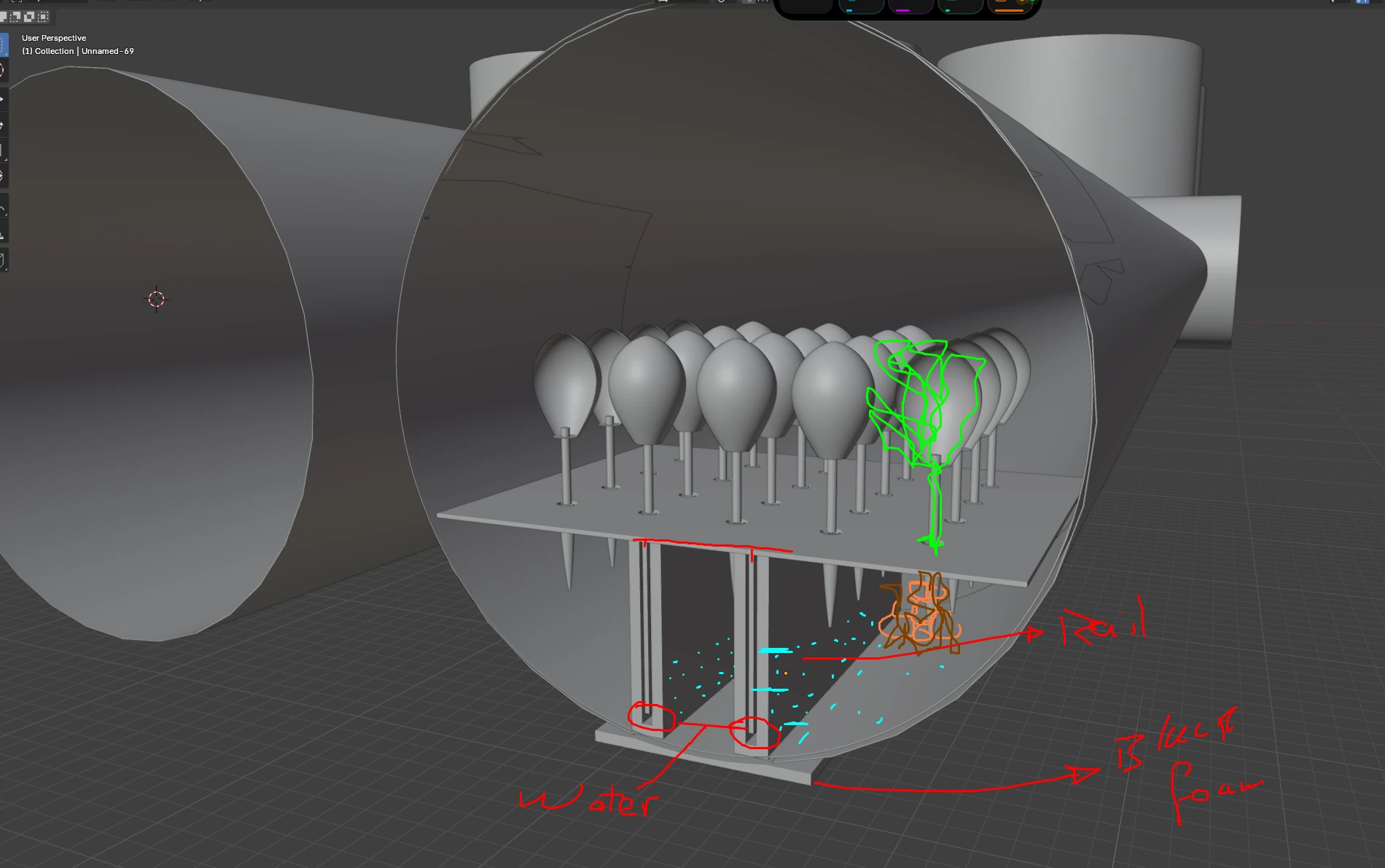
The model was not only illustrating an answer. It was being used to discover the system.

As the research was translated into three dimensions, unresolved relationships became visible.

The position of the cultivation plane, root depth, water level, structural supports and internal clearances could be evaluated together rather than as isolated components.

Early visual studies explored larger water volumes and additional service components. These were progressively simplified as the system became more coherent.

Annotated Blender working model of the agricultural tube
Working model / spatial development
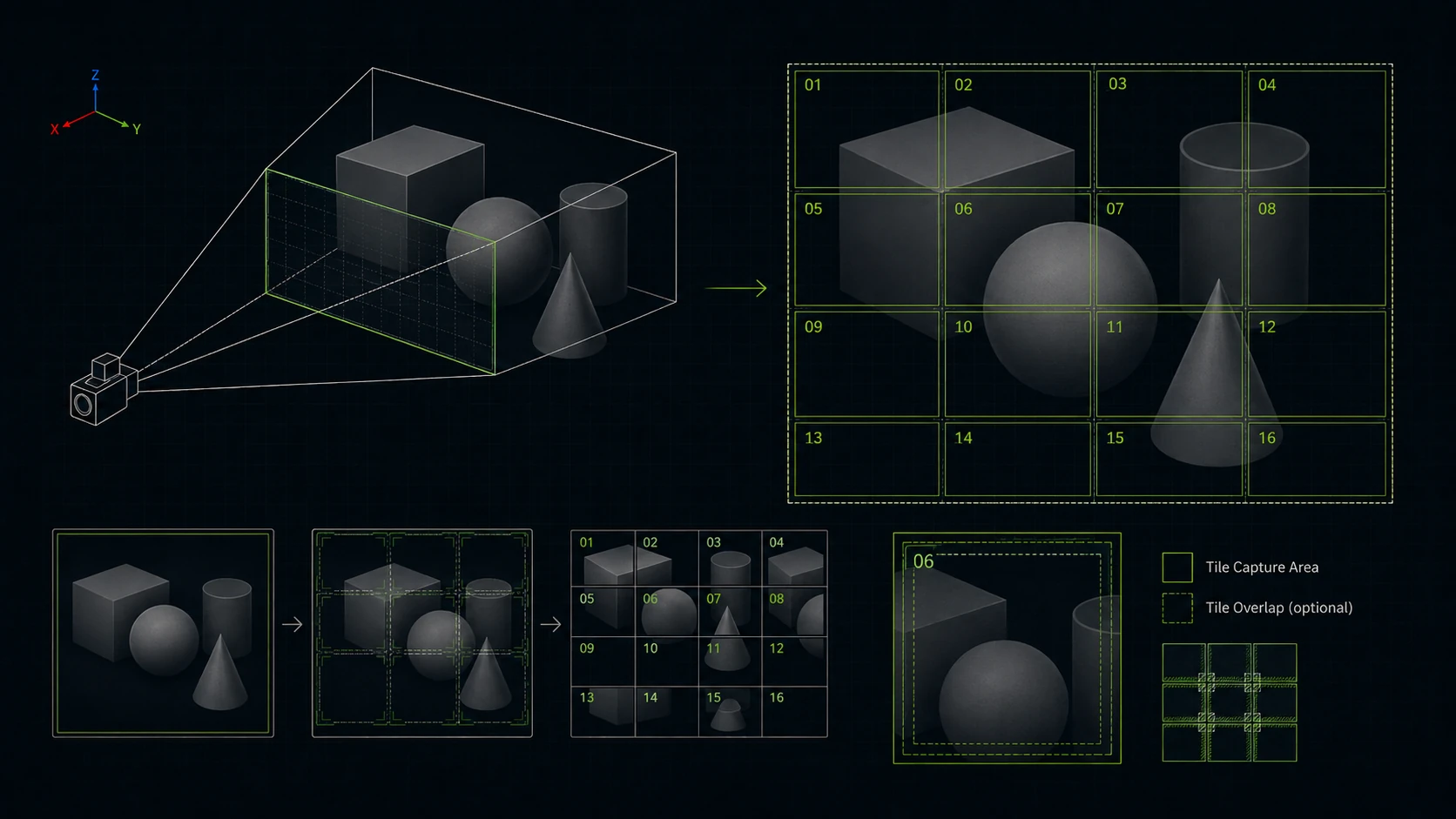
Diagram showing a 3D viewport divided into overlapping high-resolution capture tiles
Viewport limitation / tiled capture study

05

When the ViewportBecame the Limitation

As GrowMars gained detail, standard captures stopped working as technical documentation. Large outputs softened, became unstable, or lost the roots, cultivation plates and structural connections needed to explain the system.

Rather than simplify the model, I reframed capture as a design problem.

How could the working viewport preserve detail at documentation scale?
ViewportSystem detailHigh-resolution

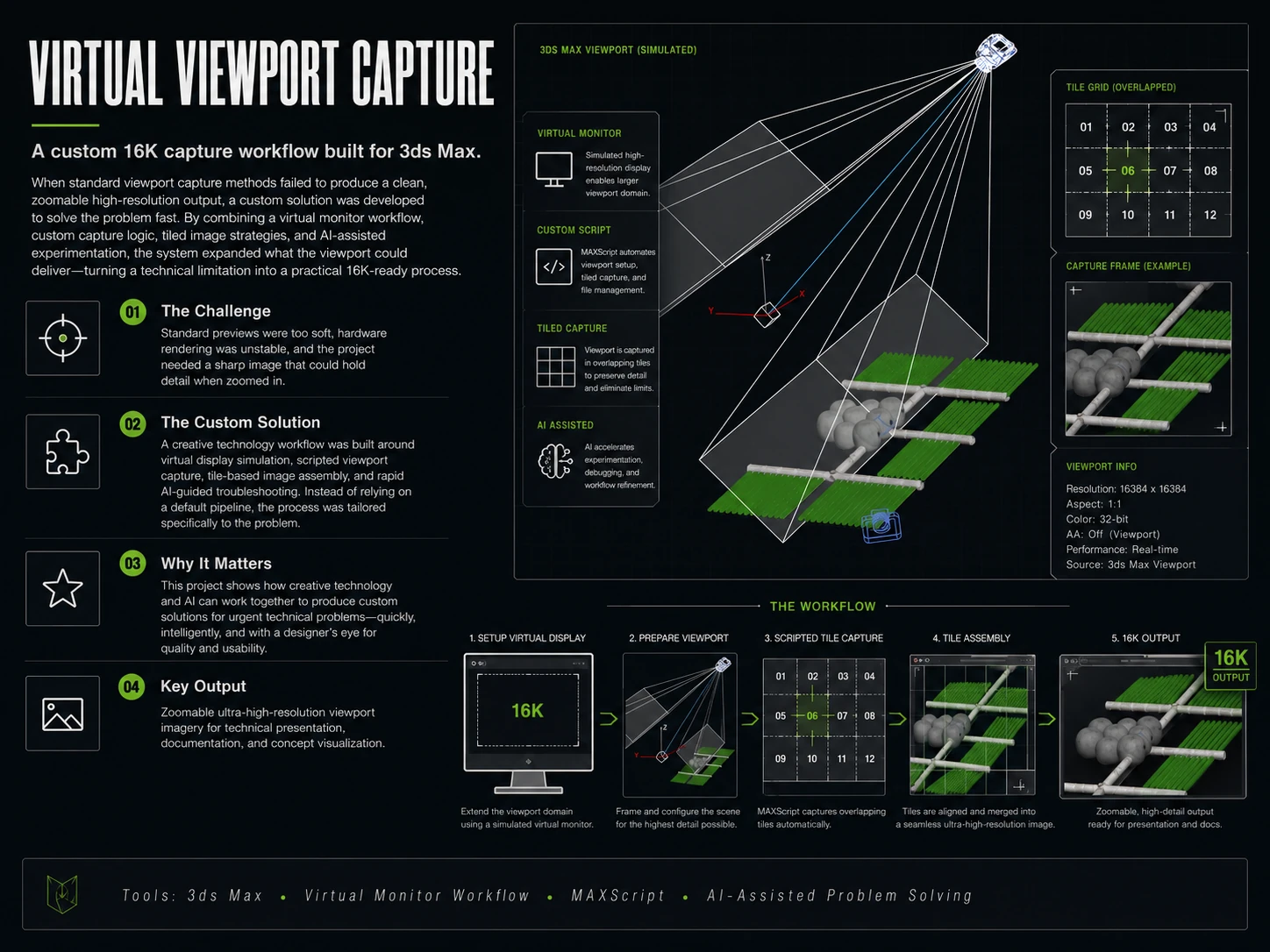
Virtual viewport capture workflow showing a 3ds Max scene, overlapping tile capture and assembled 16K output
Custom workflow / virtual viewport capture

06

Building a Custom16K Capture Workflow

I built a project-specific workflow using a virtual high-resolution display and scripted overlapping tile captures. The tiles were recombined into one zoomable image while preserving full viewport detail.

AI-assisted development accelerated scripting, debugging and iteration as new technical limits appeared.

When the tool could not communicate the science clearly enough, the workflow became part of the design.

07

One Tube Becomes an Agricultural Network

Once the individual growing unit was established, the project shifted scale.

Repeated tubes form agricultural rows with approximately 50 cm between units, creating access while maintaining a dense productive system.

The agricultural network then connects toward a larger intermediate chamber and airlock, establishing a transition between food production and the inhabited environment.

Rows of agricultural tubes connected to a future Mars settlement
Agricultural network / future settlement visualisation
UnitRowAgricultural fieldAirlockHabitat

08

Designing Beyond the Object

The final stage was not simply to produce a better render of the agricultural tube.

The system needed to be understood as part of a settlement.

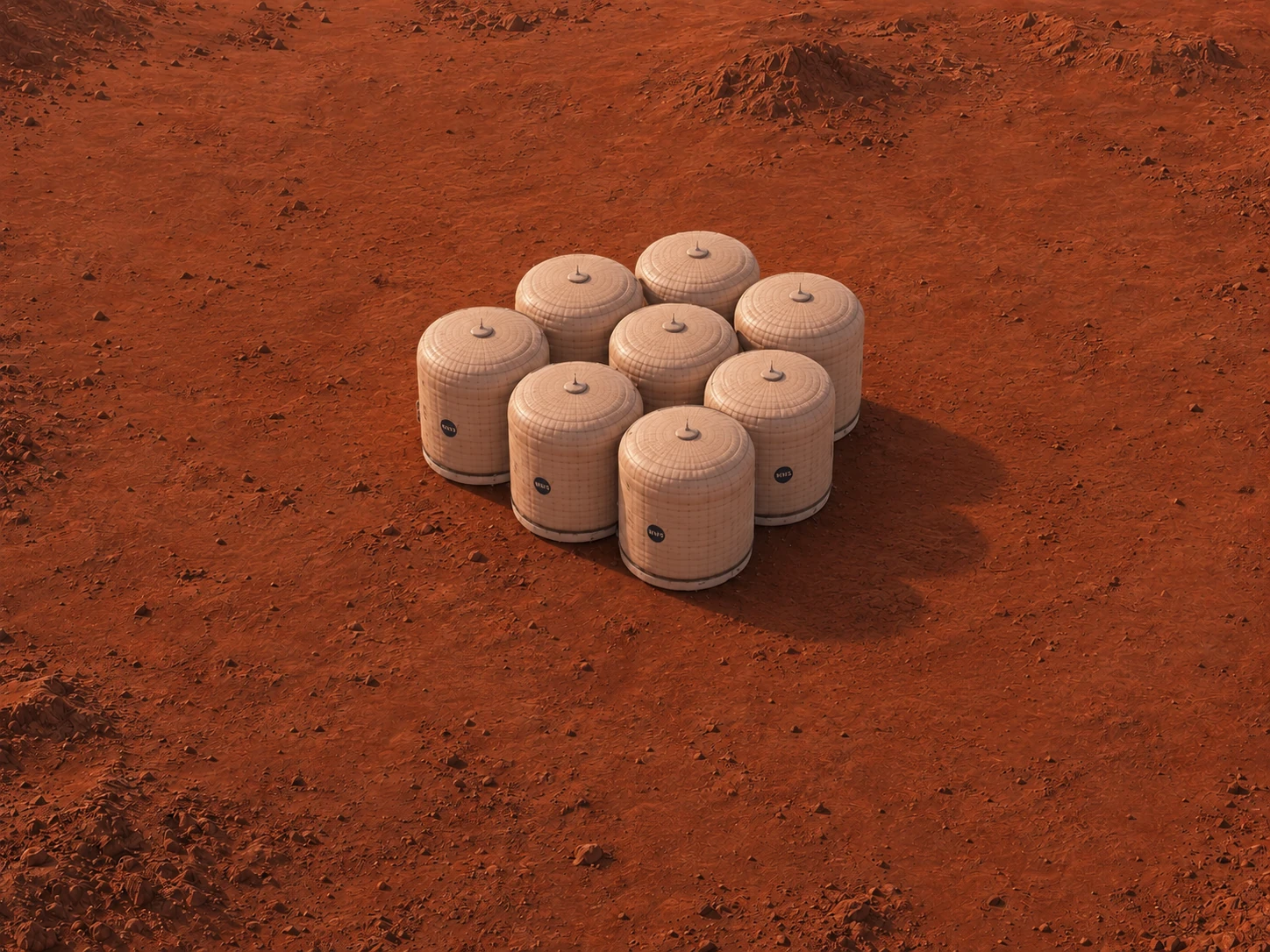
Agriculture, access chambers, inflatable habitats and supporting infrastructure were organised as related layers of one larger environment.

At this scale, visualisation becomes a planning tool: individual technical decisions begin to reveal consequences for circulation, proximity, expansion and human occupation.

The project moves from visualising a component to visualising a system of life.

Isolated cluster of inflatable habitats on the Martian surface
Settlement study / habitat organisation

09 / Reflection

Grow Mars V2 is not an attempt to redesign the science.It is an attempt to make the science visible.

The project sits between scientific understanding and design communication.

By translating technical relationships into spatial models, diagrams and future environments, visualisation becomes more than presentation. It becomes a method for understanding complexity, identifying relationships and allowing an unfamiliar system to be discussed as something tangible.

Scroll to continue